Mixing & Mastering Tip #252 ·
Limiter channel linking: linked vs unlinked, and keeping lows linked

Ruslan Slatin
Mastering engineer at slatin.pro, Madrid
Channel linking: yes or no?
Simply put, it decides whether the left and right channels are processed together or separately.
The example
Imagine a loud sound only appears on the left side of your mix.
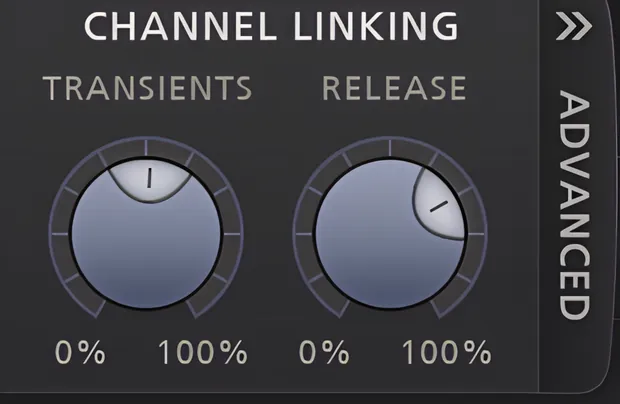
- If your limiter is fully linked, both channels react together.
- If your limiter is unlinked, each side reacts independently.
Sounds simple. But the consequences can be huge.
Why link the channels
Linking preserves the stereo image and keeps the phantom center exactly where it should be. That matters most when you have a lot of elements spread across the stereo field.
- More stable imaging
- Less unwanted pumping
- A more natural sounding master
- Your center stays centered
Why unlink them
Unlinked, the limiter applies different gain reduction to each side, which generates additional side information. The song can suddenly feel:
- Wider
- Bigger
- More dynamic
- More exciting
And sometimes that is exactly what the song needs.
There is a catch. On electronic music, hip-hop, pop, urban, EDM, or anything where the low end matters a lot, letting the lows move unsynced between left and right costs you punch, energy and impact.
The fix: Tone Projects Uni-L
There is a limiter that solves this. Lately I have been using Tone Projects’ Uni-L a lot. Honestly, it is probably the most versatile and customizable limiter I have ever used.
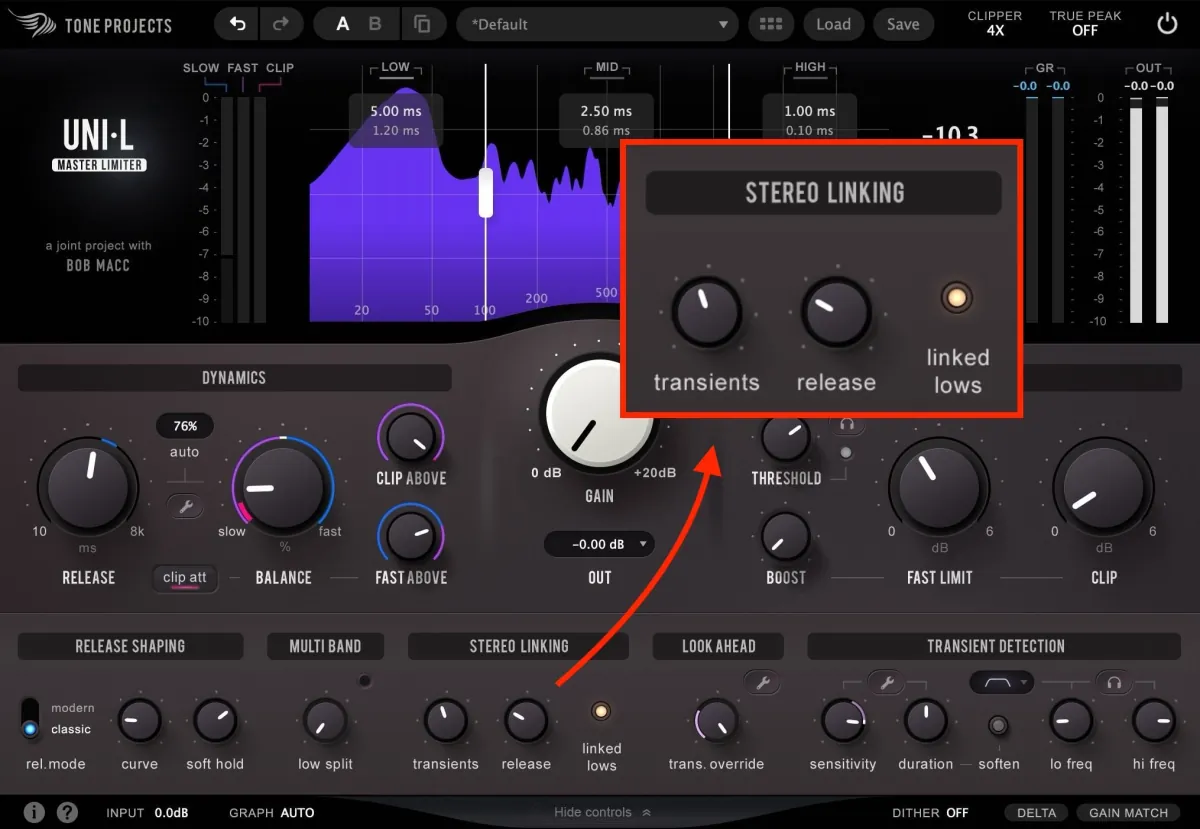
Linked Lows
It lives inside the Channel Linking section, and it keeps the low frequencies linked together no matter what the rest of the linking settings are doing.
So the low end stays 100% linked while you experiment with different linking values for the transients and the body.
Instead of being locked into someone else’s idea of where the lows should sit, I adapt it to each song individually:
- More control
- More flexibility
- More consistency
It has let me get channel linking right in pretty much every situation I have run into so far.
Channel linking isn’t right or wrong. It’s a creative decision. The trick is knowing what you gain, and what you sacrifice.
Final thought
Linked Lows has become a secret weapon for me, because it keeps the foundation solid while I still explore everything channel unlinking has to offer.
Enjoy experimenting with it. Just don’t destroy your sub in the process.
Want this on your own track?
I master more than 1,000 songs a year for artists and labels, from stems or a stereo mix. Send me your track and I'll tell you what it needs.
A new tip like this every week, free: join the newsletter.
Work with me
Whenever you're ready, here's how I can help.
 MentoringMix & Master AcceleratorWeekly video reviews of your tracks, live group calls, and the business side of a studio career.By applicationApply now
 Preset packFUSION150 hand-crafted Valhalla VintageVerb presets. Three clicks to the sound you already hear in your head.20€Get the pack
 CourseAdvanced MicrodynamicsFour hours on the micro-level movement that makes a mix feel alive. Joined by 220+ students.149€See the course
 CourseLow End MasteryKick and bass chemistry, so your low end lands on club rigs and earbuds alike. Joined by 500+ students.159€See the course
 SoftwareStudiOSThe software I run my own studio on: deliveries, client feedback, versions and invoices in one place.14 days freeTry StudiOS