Mixing & Mastering Tip #238 ·
The 1 dB mid/side rule for mastering wide mixes

Ruslan Slatin
Mastering engineer at slatin.pro, Madrid
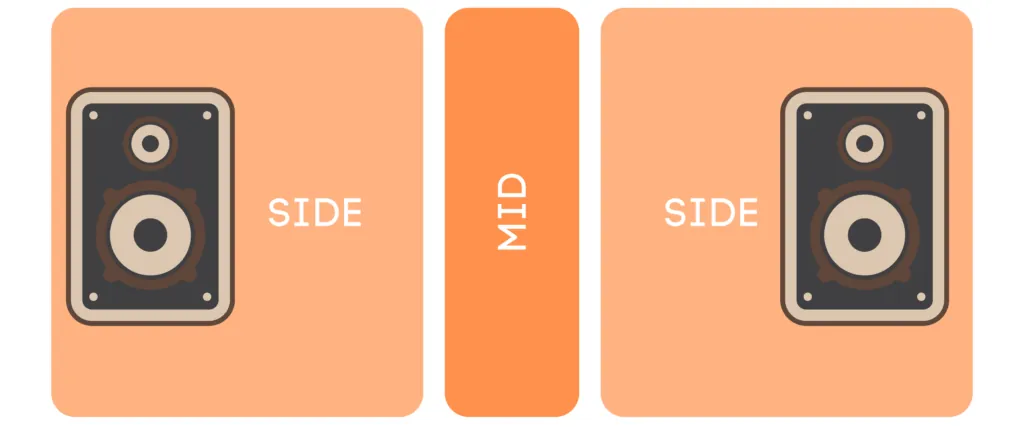
One thing I care a lot about in mastering is the relationship between the mids and the sides.
And this is exactly why I’ll sometimes pull up Voxengo SPAN on the master.
Not because I’m obsessing over visuals, but because when something feels a little too wide or disconnected, SPAN helps me confirm what my ears are already telling me.
What’s actually happening
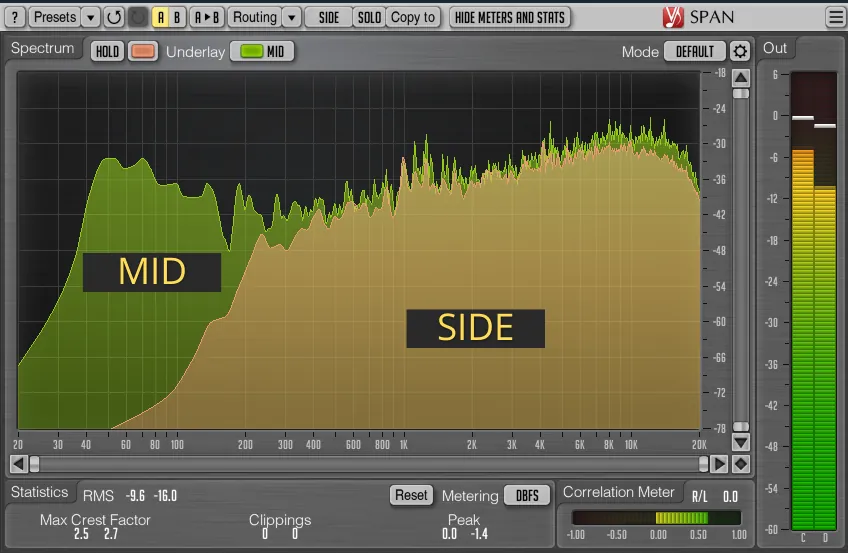
Many people hear “bring the sides closer to the mids” and immediately overdo it.
Then the mix becomes flat, lifeless and weirdly narrow.
What you actually want is to:
- Keep the directivity
- Keep the center stronger
- But tighten the relationship between the mids and sides
Usually for me, the sweet spot for a wide mix is when the mids are around 0.5-1 dB louder than the sides. That’s a great starting point.
Tiny difference, but it matters a lot for mono translation.
Check the mid/side balance
Inside SPAN, the sides are shown in red and the mids are shown in green.
If the green is way above the red, your center is dominating.
If the red overtakes the mids, things can start sounding unstable or disconnected. Especially in club music.
So I use the visual as confirmation, not as the decision maker.
Your ears still come first.
Want this on your own track?
I master more than 1,000 songs a year for artists and labels, from stems or a stereo mix. Send me your track and I'll tell you what it needs.
A new tip like this every week, free: join the newsletter.
Work with me
Whenever you're ready, here's how I can help.
 MentoringMix & Master AcceleratorWeekly video reviews of your tracks, live group calls, and the business side of a studio career.By applicationApply now
 Preset packFUSION150 hand-crafted Valhalla VintageVerb presets. Three clicks to the sound you already hear in your head.20€Get the pack
 CourseAdvanced MicrodynamicsFour hours on the micro-level movement that makes a mix feel alive. Joined by 220+ students.149€See the course
 CourseLow End MasteryKick and bass chemistry, so your low end lands on club rigs and earbuds alike. Joined by 500+ students.159€See the course
 SoftwareStudiOSThe software I run my own studio on: deliveries, client feedback, versions and invoices in one place.14 days freeTry StudiOS